
Environmental Kinship Guide - How I Got Started
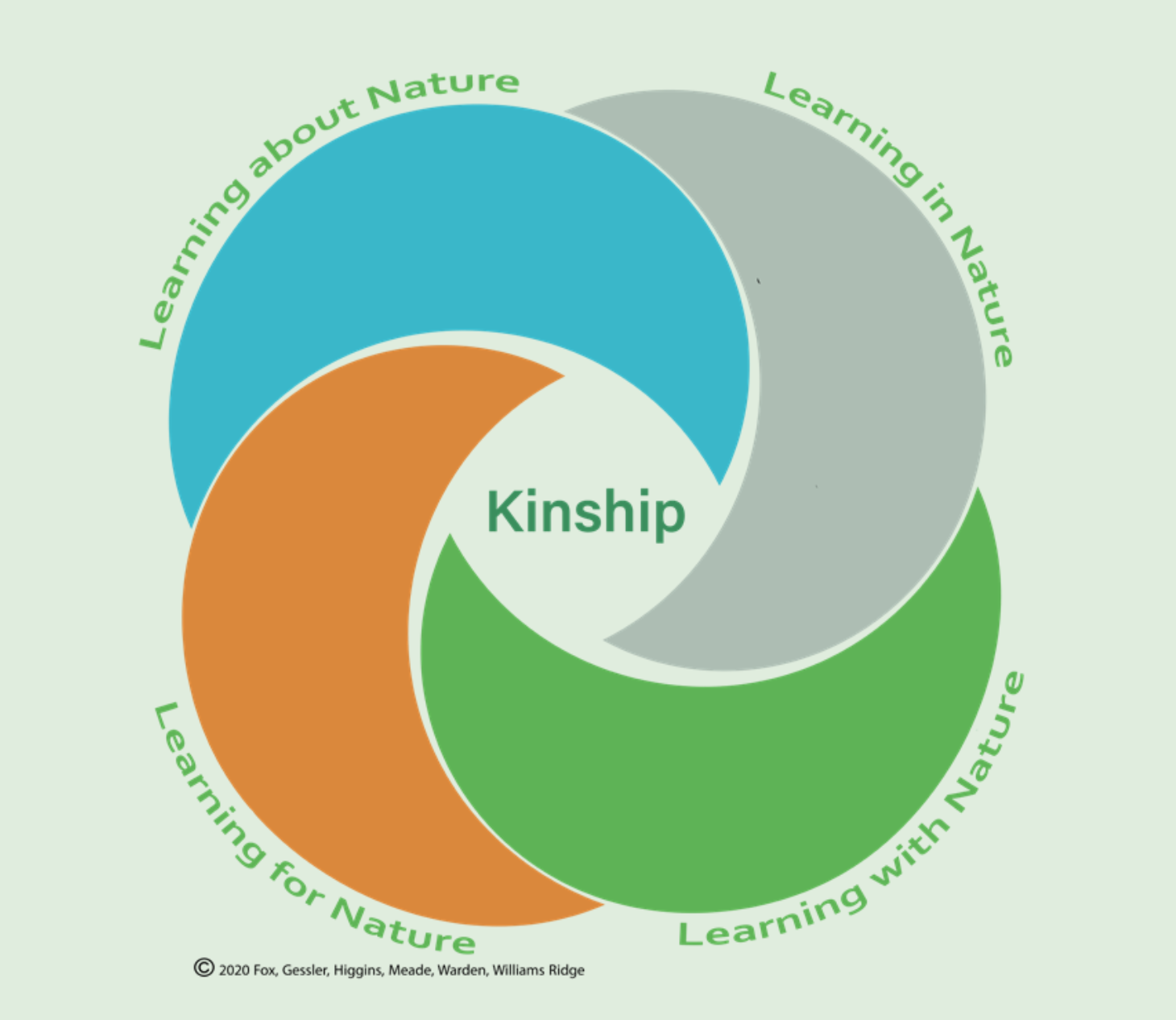
When I was first introduced to the Environmental Kinship Guide I found the content a bit overwhelming. There are some very familiar concepts found across early childhood education in New Zealand, such as the importance of teaching and learning sustainable practices. However it tackles some less tangible concepts like learning alongside and in partnership with nature, with all the ideas centred around the central concept or goal of children (and adults) building kinship with nature.
One thing that really helped me out, and Anne mentions it in her video on the Environmental Kinship Guide (here), is the EK Guide’s one pager that summarizes all four sections and breaks them into consumable bullet points. I found it’s enough information for me to get some ideas and grasp the overall concept of the section, i.e., Learning About Nature. It doesn’t overwhelm me. I can have a look just before I head out to the park with the tamariki or I can flick my eyes over it during a planning conversation. Then, when I’m looking for more in depth guidance or some examples to really clarify my understanding, I head to the full guide, for example, when I’m doing goal setting or forward planning for children.
To be honest, although it felt long at first, the full guide itself is very straight forward and doesn’t have a load of jargon. It definitely feels written to be used. As I become more familiar with the guide, the way nature learning is broken down into four sections has really helped me to categorise and streamline my teaching goals to do with nature. Before using the guide, my teaching around nature was all lumped together in my mind, as a big kind of amorphous blog of possibilities and potentials. Now, having a framework to shape the learning that occurs around nature, I find my teaching far more intentional and targeted in a way that encourages more depth and exploration for the tamariki and myself. Overall the Environmental Kinship Guide is a great free resource that has definitely added value to my teaching and learning practice.
Check it out for yourself: environmentalkinship.org
Written by Meg Kwan
